Latest Movie :
Recent Movies
Showing posts with label history. Show all posts

Dildo 101: The History of the Phallus

From Freud to historical art, we love history at GetLusty headquarters! We love history so much that we want to learn as much as we can about sex's past. Just recently we dove into the history of the blowjob. Since we got great response to that post, we decided to give you all the history of the dildo! Where did the dildo come from and who invented it? Well, Bethany Kibblesmith is here to answer all your historical questions revolving around this phallic toy.

* * *

Have you wondered where and when your favorite phallic friend sprang into existence? Well, the history of the dildo is actually quite an interesting story. It’s a long one, too.

Fake penises have been a part of human culture since before we had writing, metal tools and agriculture. The oldest phallus found that could have been used for insertion dates back around 30,000 years, hailing from Germany. Archaeologists have all but called this a dildo. The reluctance to label it a dildo is one I share, because it’s so difficult to substantiate claims on prehistoric cultures.

As well, it’s impossible to tell whether these were used by women, men or both, and such claims have a tendency to ruffle various feathers. You can’t very well tell Swedes that the most recently found Ice Age “baton” (archaeologists’ codeword for dildo) was probably up their ancestor’s butt. At least not without proof. It’s hard enough to call things dildos, with the assumption that they were for vaginal insertion.

Labeling artifacts as sex toys is even trickier when you consider that almost all cultures have had a fertility god at some point in their existence, and subsequently we have an absolute truckload of fake penises used for religious purposes. As for masturbatory uses, women have used wooden dildos, leather ones, and stone dildos. They were even sometimes made of tar and straw. Yikes!

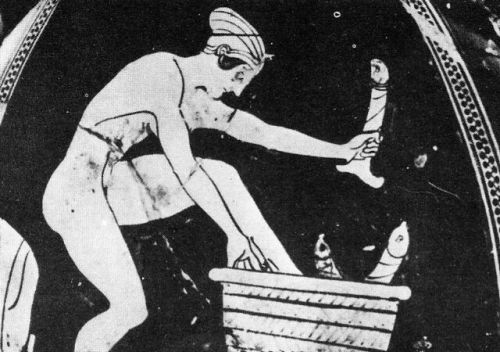
The dildo has a surprisingly public presence throughout history. Greek comedies have many references to women buying or using dildos, and in one play mourning the loss of hers. Poems and plays told tales of lusty, dildo-obsessed women and dildo-makers hiding their real profession under various fronts. One Greek vase even shows a man inserting a dildo into a woman’s anus while she fellates a different man (Greek sexuality is a whole other article).

While it was usually used for comic effect in Greece, other parts of the world saw the dildo very differently. Chinese women, for example, used dildos that were made of lacquered wood, and lovingly crafted with grooves, bumps and all kinds of stimulating little details. Lacquer was made from beetles at this time, and this was an expensive, time-consuming process. What this tells us is how important a pretty dildo was! More seriously, dildos weren’t being hidden away shamefully, but were in fact significant enough for lacquer.

India had a similar lack of embarrassment for dildos. The Kama Sutra, as one of the most well-known sexy texts, is a great source for old-timey dildo information. It lists FIVE different ways to construct dildos, along with very detailed instructions on what materials to use. What is most significant in this, is the dildo is incorporated into coupled sex, not masturbation. Furthermore, the incorporation of sex aids was solely for improving the woman’s pleasure. This positive attitude towards women’s sexual pleasure is much more common in Eastern history than in Europe.

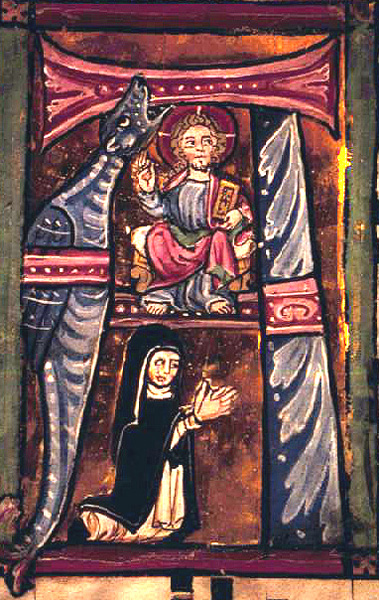
Europe presents a stark contrast to India and China. For example, in a medieval penitential — a book listing sinful acts and corresponding punishments — the reader is quizzed as to whether she has ever fashioned a fake penis for her sexual pleasure. In fact, the penitential goes so far as to correlate women’s lust to the size of the dildo they fashion. The punishment ascribed? Penance on holy days, for five years. I don’t know how much you know about medieval religiosity, but there were a lot of freaking holy days.

It is from England, though, that we get the word dildo. At least by the 1590s, dildo referred to penises. To the right, you'll see examples of 18th Century dildos from England. The word was common in bawdy songs, and even appeared in a Shakespeare play. When the word dildo was used, it was in a naughty sex song intended to make listeners laugh. “Signior Dildo” is a perfect example, and contains tons of innuendos and sex puns.

Dildos have appearances in pornographic literary works, from the 17th century onwards. Victorian private diaries chronicle dildo usage. Saul Bellow and Williams S. Burroughs refer to them in their 1950s era books. And of course, the dildo’s incorporation into pornography gradually begins around the 1900s, around the time of photography’s rise, until it becomes a mainstay for masturbatory and lesbian flicks.

As a whole, culturally, technologically, and so on, humanity has advanced far past the days of the medieval era. However, there is one aspect in which we haven’t advanced at all: the humorous aspect of the dildo has yet to lose any of its power. Though John Wilmot’s “Signior Dildo” was published 339 years ago, dildos are still a punch line.

Women and sexuality are still complicated subjects for most people. Treating something used for solo pleasure humorously actually shows a lot of distrust and insecurity, possibly because it excludes men. Women who admit to masturbating are still sometimes treated oddly, like hypersexuals, and vibrators and dildos are relegated to the sock drawer, the shoebox in the closet, or some other hidden little spot. Women are expected to be mortified if their dildo is uncovered unexpectedly, rather than shrug it off and say, “Yeah, that’s mine. So what?” Even though progressive attitudes toward sexuality have been increasing more and more as time passes, sex toys and masturbation are still somewhat taboo.

Worldwide, there are still countries where dildo possession and selling is illegal. Ironically, considering its history, India is one of these countries. What might surprise you is that it’s only in recent times in the U.S. that laws against sex toys have been abolished.

Texas only legalized dildos in 2008. Alabama, in fact, still has laws against the selling of sex toys, to this very day. What makes this issue more complicated are the use of religious rhetoric and religious leaders classing sex toys in biblical arguments. An Irish preacher went so far as to say “there is no moral way to use one of these devices” and blamed the humble dildo for causing poor morals and promiscuity. Never mind that exactly zero babies and STDs have been caused solely by dildo use.

Today, regardless of illegality in some countries, glass, acrylic and silicon dildos vary wildly in shape and size. Many are beautiful enough to set up on a shelf like any other artwork. If you’re looking to buy one, for your health’s sake, please avoid PVC! I know they’re a little cheaper, but other materials are safer. PVC leaches out cancer and birth defect causing chemicals, and it cannot be sterilized. Silicon, glass and steel are much better options for your health, and will last much longer. Consider what stimulation would please you best and look for a good material in the shape best designed for that kind of stimulation.

We're very excited to have Bethany Kibblesmith as GetLusty's newest writer. She's passionate about keeping it sexy inside and outside the bedroom in her own relationship and in yours.

Bethany is twenty-two and an English major. When she isn't scrambling to finish homework, she's with her boyfriend, reading, doing yoga or cooking. She enjoys the finer things in life like, secondhand clothes, warm showers, and socks without holes. She writes plays when she isn't writing for school or GetLusty. And if you meet her she will, without question, make a sex joke at some point. Email her at Bethany@GetLusty.com if you have any questions!

The History of Blowjob: Why It's So Popular

Since it's Dick & Dildo December, what better time to think about this wonderful act? We admittedly love giving and receiving head.  Especially blowjobs. We gave you ideas and recommendations on how not to give blowjobs. Of course, Camille Crimson added her 5 fav tips on giving head, as well as why you should give great head. Bethany Kibblesmith reports.

There are many reasons to love blowjobs. It can mean the ultimate pleasure to your lover. Bethany Kibblesmith, our resident researcher, is here to present the continuation in a series on the history of blowjobs. This time, she presents Roman, Greek and French perspectives, as well as adding Freud to the mix. Turns out the blowjob has a long and tumultuous history! Read on.

* * *

Welcome to Part 2 of our article on the Blowjob Historically: Why The World Loves Head. As we move from the Ancient World and Eastern thoughts on giving and receiving head, we see the most significant difference between the Eastern and the Western psychology is the shift that fellatio was primarily an act of domination to a consensual act of pleasure. The fellatrix or fellator giving the blowjob is still seen somewhat as made unclean by the act, but it was now this was more a consensual act of service and a means of giving pleasure to the recipient.

The patriarchal theologians in Europe who ruled the public morality via Church doctrine lumped the blowjob in with all the unnatural acts under the blanket term sodomy, which just means any sex act that cannot result in pregnancy.

That’s right ladies and gentlemen, we are ALL sodomites. Say it loud and proud. It does seem that the French were quite well known for blowjobs since the contemporary slang for going down and sucking cock was called "the French way." Makes you rethink, "French kiss" doesn't it?

Primary documentation of Medieval lovers/sex workers giving blowjobs is harder to come by, references in contemporary literature such as Chaucer's Canterbury Tales suggest it was a common practice. Though legally a wife could be legally punished if her act of fellatio was made public.

Generally speaking, if a husband and wife engaged in oral sex or other so called immoral acts it was likely you’d go to confession and tell your priest. Imagine that if every time you went down on your dude, you truly felt God watching and condemning you to Hell. Of course, when you get to the history of the Popes and priests it was a case of do what I say.  Why do you think Shakespeare references getting a fallen woman to the "nunnery," which often were used as brothels for the Church hierarchy and friends. The nuns are quite familiar with being on their knees aren't they?

Censorship does make the history of the blowjob harder to track as time goes on. The infamous Marquis de Sade of France wrote a character who only took pleasure in fellatio. Less well known pornographic literature featuring fellatio in the sex scenes from these times has also survived, giving us a look into the sex acts of the past.

These books were taboo, and their possession could often result in fines and jail time. Sodomy, with the blowjob as part of it, was still punishable by jail time, and homosexual sodomy was punishable by death and also caused the ruin of public figures if their lifestyle were publicly known.

The Victorian's didn’t publicly favor the blowjob much like the Medieval era. Dating back as far as the Romans and Greeks, oral sex was the domain of prostitutes. Wives of the upper-class were not for pleasure, but baby-making.  Marriages were still a business arrangement and women had to be kept in a distinct status. If blowjobs occurred, it was not spoken of directly in polite conversation and probably behind closed doors with the shades drawn and the servants all dismissed for the day. Think "lie still and think of England" as a reference.

Freud had his heyday in the Victorian Era. His burgeoning psychoanalysis suggest someone with an oral fixation is stuck in an infantile oral stage. Characterized by using ones mouth too much with smoking or biting the nails are common examples.  Enjoying oral sex, to Freud, was less mature than enjoying only vaginal sex. Pornographic books of this time, however, often featured blowjobs. One called “Eveline” went so far as to feature fellatio as her specialty.

So at what point did this attitude of the blowjob change? When did we all stop pretending to hate the blowjob?  The answer is pornography. Pornography was completely changed by the invention of the camera. Some surviving prints show fellatio, even going back to the 1920s,

Alfred Kinsey’s studies in the 1940s found oral sex to be a common activity. His studies made public what had previously been prudishly private.  People like having sex, with strangers, with their spouses, and heck even with their mouths. Kinsey’s willingness and lack of shame regarding taboo sex acts and his scientific approach are likely some of the most significant factors for the public’s gradual acceptance of the blowjob.

You still can't drop to your knees and give your lover a hummer while waiting in line at Disneyworld. There are still tons of taboo feelings regarding the act, but at this point much of the shame or depiction of lower status surrounding the act is dissipating.

Deep Throat” and Linda Lovelace in 1972 also paved the way to bringing oral sex into the mainstream.  Though the beejay was already a hardcore staple, “Deep Throat” became controversial because, even though tame by today's porn standards, it was still put on trial for obscenity.

Pop culture helped validate fellatio through ancient depictions, naughty Medieval references or De Sade’s books, to grainy silver daguerreotypes in the ’10s and ’20s.

Thanks to Freud’s damnation and Kinsey’s redemption the blowjob is now mainstream. While there are still laws on the books even in the United States that make the act of fellatio illegal, generally speaking modern society generally approves of blowjobs (between consenting partners) as a normal, healthy, totally awesome part of the human sexual experience.

We're very excited to have Bethany Kibblesmith as GetLusty's newest writer. She's passionate about keeping it sexy inside and outside the bedroom in her own relationship and in yours.  

Bethany is twenty-two and an English major. When she isn't scrambling to finish homework, she's with her boyfriend, reading, doing yoga or cooking. She enjoys the finer things in life like, secondhand clothes, warm showers, and socks without holes. She writes plays when she isn't writing for school or GetLusty. And if you meet her she will, without question, make a sex joke at some point. Email her at Bethany@GetLusty.com if you have any questions!
The History of Foot Fetishism

It seems that people really love feet. It's considered the most common fetish, not only in fantasy, but also in practice. This creates many questions, such as where did it come from? How long has it been around? A cross-cultural historical study shows that this fetish is nothing new. GetLusty staff writer and history lover Matt Stickles takes a look back into history to explore our love of feet.

* * *

Foot fetish is huge! It's everywhere... and always has been, it seems. The fetish can be traced back as far as the ancient Greeks, and it shows up all over the place from then till now. Its popularity isn't really that difficult to understand.

Most of us love having our feet rubbed and pampered, so if someone wants nothing more than to worship your feet, then hell yeah. Go to town. Studies have shown that foot fetishes are the most commonly pursued fetish throughout the world.

Many celebrities and famous figures have come out of the closet, such as F. Scott Fitzgerald, Thomas Hardy, Jay Leno, and even the great Casanova himself. However, just as any other fetish, it's considered to be taboo and weird. If it's so common, then why do we think it's so abnormal? What ever your opinion, the love for feet is nothing new.

The Greeks

The ancient Greeks had no problem expressing their love of feet. In fact, the basic unit of measurement we still use today, the “foot,” is commonly thought to have come from what they considered to be the length of a Goddess's foot. Goddesses drew powers and strength from their feet, in which their second toe was thought to have provided their male powers. Though feet were a source of power for Goddesses, they were still considered a private part of the female anatomy as Greek art depicts virgin Goddesses with their feet covered.

Now back in these days a woman was free to walk around with her breasts exposed, but if she revealed her foot, it was thought of as a blatant sexual advance.

In the Mediterranean

Around the 1st century, feet were still pretty important to cultures around the Mediterranean, and not just in Greece. Washing someone's feet was a huge sign of respect and admiration. Though it is not nearly as sexy as the Greeks' depiction of Goddesses, many accounts of the life of Jesus Christ reference foot washing. Also, washing the feet of house guests and strangers is still a common practice today in many Mediterranean cultures.

Western Europeans, STDs & feet 

Similar to the Greeks, religion was influential on what a woman's sexy foot was supposed to look like. The attractiveness of a woman's foot was based on the Christian belief that all physical characteristics were to be God-like. The poetry of the time reflects that the ideal female foot was white, narrow with high arches and long straight toes. Toe nails were supposed to be long with large white moons on pink pale nail beds.

Back when crusaders were returning from the Holy Land, an array of STDs came back with them. An increase in the amount of foot fetish material is seen during outbreaks of gonorrhea and syphilis.

More recently, evidence shows that there was an increase in foot fetishism during the AIDS epidemic of the early 1990s. In fact, according to one study of 8 pornographic magazines, pictures of bare feet increased explosively. This is not enough information to draw any real conclusions, but it does hint that when penetration is coupled with fear, people seem to be drawn to their feet to fulfill their sexual desires.

The Far East

No nation past or present can compare to the Chinese in their historical love affair with feet. Beginning with the Sung Dynasty, in the 10th century, young girls had their feet bound in order to preserve their daintiness. The Japanese also had their own cultural practice surrounding feet, in which a child of royalty would be carried up to the age of eight or ten as their feet were believed to be too pure to touch the Earth. According to extensive BBC research, "The bound foot was also a symbol of identity and virtue. A bound foot signified that a woman had achieved womanhood, and served as a mark of her gendered identity. The Neo-Confucian thinker Zhu Xi (1130-1200 AD) promoted foot binding in southern Fujian in an attempt to instill in the natives a sense of propriety and chastity." Chasity, indeed!

Feet have long been of cultural importance, whether it was erotic and sexy, or a sign of respect. Soon, we'll be talking more about getting lusty and we'll have more on exactly what is foot fetishism. For now, stay lusty!

Our newest writer is a history, sex and love... lover, Matt Stickles.

Matt is a recent grad from the University of Kansas with Bachelor's degrees in History and Anthropology. Matt currently lives just outside of Chicago. When Matt is not writing and reading articles on GetLusty for Couples, you can catch him getting drinks with friends, reading science fiction, watching the Jayhawks dominate college basketball, or hanging out with Hannah, his Bernese Mountain dog. Have questions, comments or concerns? E-mail him at matt@getlusty.com.

Putting the Fun in Feminism

At GetLusty, we love feminism because it puts us on equal footing professionally. When searching for "feminism" on shutterstock, one of the first images found is below. GetLusty's  Lynn Olejniczak reports.

* * *

Raise your hand if when you hear the word “feminism” part of you goes into a coma. Yeah, me too. First, visions of bra- burning, turtleneck wearing women from the ‘70’s start organizing marches across my brain. Then heavily tattooed lesbians sing Ani DiFranco songs. They begin screaming about men raping the environment, and everything goes black. In reality, this has all and nothing to do with Feminism. But let’s not turn this into a lecture! Let’s put the “fun” back into Feminism! And pick up a few credit hours on the way.

True or False

Q: In Medieval Europe married women enjoyed more rights than unmarried women.

False. Unmarried adolescent girls and widows were able to own property and enter into business in the private sector. It was only when they married that women gave up their rights, merging with their husband, and losing power to his gain. Granted, we’re talking nobility here, and noble women married earlier. Class and economics have been around since the earth cooled. But once the husband kicked the bucket, the widow was able to re-enter the business sphere and generally stayed a widow.

So, what can we take away from this? It sucked being a poor woman in medieval Europe? Sure. But even 600-1000 years ago women saw the difference between their rights as an individual, and their rights in marriage.

Feminism is defined as “the advocacy of women’s rights on the grounds of political, social, and economic equality to men.” The word “feminism” wasn’t coined until the 1800’s but the concept has been around much longer than that. Life during European, Roman, Greek, Islamic wartime is tough. The winners survive, and make the rules. Mostly men fought, killed, and got to make those rules. If going into labor was revered as much as killing people I doubt the word Feminism would even exist.

Women gain freedom in childbirth

Ding-ding-ding. True, well sort of. Before pregnancy was considered a medical condition, and only doctors (read: men) could deliver babies, you called the midwife. When a woman became a midwife, she was granted the freedom of tending to the laboring mother. The midwife is the one with the “freedom.” She enjoyed certain amount of time away from the household, she received some respect and even power in the community. Unfortunately, when overseeing a magical act of a delivery gone wrong the midwives were often accused of witchcraft.

A large part of feminist rhetoric is aimed at a woman’s right over her own body. Reproductive and contraceptive rights were obviously in the forefront of this year’s elections. The definition of rape and the results thereafter were also at great debate. Men and women loudly voiced their opinions proving that one doesn’t have to be a woman to believe a woman has rights over her own body. But Feminism isn’t only about the sexual rights of women. It can include the rights of the LGBT community, a stand on pornography (both for and against), opinions on prostitution and trafficking. It concerns a woman’s health rights, and rights regarding sexual harassment and abuse. Feminism does not have to include man:bad, woman:good any more than religion has to include fire and brimstone. But just like radical religious zealots there are radical feminists. Unfortunately when most people hear the word “feminist” they envision the radical, woman-only type.

78 year old feminist, Gloria Steinem has retired

False. OK, that was a lay-up. At the 40th anniversary of Ms. Magazine, Steinem made a very insightful point. She said, “...All great social justice movements must last something like a century if they are to be really deeply absorbed into the culture and understood to be normal and natural.”

The Industrial Age (1750-1850) eventually led to the fight for workers’ rights. The current attitude of the majority is that workers are entitled to proper pay for proper work, time off, enforcement of child labor laws, and safe working conditions. Unfortunately, this fight still takes place but usually because people try to skirt the laws that were established to uphold what was believed to be normal and natural. Women’s rights, civil rights, LGBT rights are still considered young movements in comparison. 

Feminism today is generally more inclusive. Color, nationality, religion, and class encompass the push for equal representation for women. Recent electoral history proves there are still examples of laws oppressing women. But Feminism today is not only about the law. It's about changing the thought process that says men have superiority over women (read: equality). It challenges the notion that women don’t know enough to govern their bodies. It urges recognition of the influence of women in art, literature, music and architecture without encouraging separation.

The hurdle we must get over in understanding Feminism is not assuming that women are fighting to usurp power but to be included in it: equally. But if Gloria is right, we still have another 60 years before we are close.

Class dismissed.

One organization GetLusty has supported in the past is WORD: Women Organized to Resist and Defend. They're a liberal organization that here in Chicago, nationally and international have organized grassroots protests in support of women's reproductive rights. They're pretty awesome and completely volunteer run (only starting mid-2012, they've done quite a bit so far).

Speaking of feminist sex, have you 'Liked' GetLusty on Facebook yet? We're giving away a Tiani 2 to a lucky 'Liker' by December 1st. We're also on Pinterest and Tumblr, as well as Twitter @getlusty. What?! You're on those platforms and aren't in tune with our awesome content? Have amazing sex. Get lusty.

Lynn Olejniczak is a native Chicagoan who loves her city and everything it has to offer. She spent 10 years as a NASDAQ trader in Chicago and New York in the 90's, then went back to college when "the rules changed and I realized no one was going to pay me lots of money to swear at them anymore."

She loves good food, and a perfectly poured Guinness at any Irish pub in the city. Her Beastie Boys CD's rest comfortably next to her Misfits vinyl, and she believes Underground Garage is the best radio program known to humankind. Armed with degrees in History, and a love of Urban Planning, Lynn is currently writing and researching a book on the 80's Chicago bar scene. Get in touch with Lynn at editorial@getlusty.com.

Be a Sexy Vixen. Learn It From Bettie Page!

This summary is not available. Please click here to view the post.

A Brief History of the Vibrator


We kinda love history. From the history of burlesque to dildos, we're a fan of understand the past and how it effects us today. Ever wonder how you lil' buddy came into being? We have already covered the history of the dildo, blow job, and Burlesque. Now it's time to discover where the vibrator came from! Dr. Jenn, (also known as Jennifer Gunsaullus, PhD) gives us a quick and witty history of how this wonderful toy, or necessity, became a reality.

* * *

Imagine it is 1880 and you are a London housewife. You are unsatisfied with your life, easily irritable, depressed and experiencing insomnia, so you seek a doctor for assistance. If you can afford Dr. Robert Dalrymple and his protégée Dr. Mortimer Granville, you would be diagnosed with “hysteria.” This was considered a plague of their time, a “disabling condition” for at least half the women of London. The cause of this plague? An “overactive uterus.” Here’s the best part: The treatment for hysteria was…(wait for it)…having your clitoris manually stimulated by your doctor until orgasm. I’m serious. This was a medical treatment to address the nervous system and help put a woman’s uterus back in order.

Luckily for Dr. Granville, the eager Dr. Dalrymple happened to have a friend and benefactor who was also a Lord of London and eccentric inventor. His latest invention was a steam-powered generator attached to a feather duster to ease the strains of housework. However, they saw the potential to extend this technology to ease the strains of Granville’s handiwork. The result? Multiple “paroxysms” in a quarter of the time. The marketability of this as a home product for the relaxation and health of women led to the invention of the portable home “massager,” the precursor to our favorite vibrators today.

I’ve known about the origins of the modern vibrator for many years, but "Hysteria" helped fill some confusing gaps for me. For example, how was it possible that the doctors didn’t know they were sexually pleasuring their female patients? How did they not know they were inducing an orgasm? Also, wasn’t this type of touching considered very personal and embarrassing? At the time, it was believed that women only experienced sexual pleasure through penetration of a penis. The doctors believed they were triggering a paroxysm which was understood to be a necessary outburst and release of emotion. And as depicted in the movie "Hysteria," the doctors provided their vulva massage to each patient behind a red velvet curtain, draped at the woman’s waist, to maintain modesty.

The history of the vibrator is confusing and truly ridiculous by today’s understanding of sexuality. Despite dabbling in serious topics, Hysteria takes a romantic comedy approach that is entertaining and accessible, but certainly not earth shattering. I recommend it as a worthy rental to tickle your sexual funny bone. And what movie about vibrators wouldn’t have a happy ending?
Jennifer Gunsaullus, PhD, is a sociologist, sexuality speaker, and sex therapist, with a passion for challenging people to sexually think outside the box. Dr. Jenn is a public speaker on topics including healthy relationships, love, gender, mindfulness, erotic play, and happiness. She counsels individuals and couples, in person and over Skype, to assist in creating and maintaining open communication and fulfilling intimacy. Dr. Jenn is a contributing writer for Pacific San Diego Magazine and is a sex and relationship expert on Fox 5 news and San Diego Living. Follow her on Twitter @DrJennsDen and Facebook.

Burlesque 101: What's Behind the Art of Tease

This summary is not available. Please click here to view the post.

The Birth of the Modern Gay Rights Movement


After finding a slightly sexist but hilarious meme that we posted on Facebook (which was approved by our gay and straight friends), it dawned on me that I knew very little about gay culture. And the gay rights movement for that matter. We care about and support gay marriage. So we should know the history of the gay rights struggle. In the United States, as well as other countries, the LGBTQ movement has come a long way. Luckily, GetLusty's Mary-Margaret Sweene is here to review some of the milestones that have led us to where we are within the American gay rights movement.

* * *

When politicians and pundits talk about the modern gay rights movement, it is often in a way that obscures the long and lumbering, laborious and lovely, struggle for equal rights. It's easy to forget that groups of gay activists have been making noise for quite some time.

Homosexuality has, indeed, been observed as far back into history as we can reach, across cultures and continents. The Greeks are often called to mind. But when did an activity become an identity, a census check box, a political movement? Historian John D'Emilio begins his book Sexual Politics, Sexual Communities in November 1950, in a Los Angeles living room. Five men met at the home of Harry Hay to discuss "the heroic objective of liberating one of our largest minorities." This gathering eventually led to an organization called The Mattachine Society, the first established gay rights group in history.

Of course, this didn't just pop out of history at random. As the nuclear family changed, the mandate of procreation curbed. WWII scattered young people of marrying age. Men hunkered down together in fox holes; women donned pants and operated factory equipment. People moved away from their families to big cities. For the first time, men and women had a real choice in who they would pursue. The Kinsey Report, published first in 1948, disrupted long-held assumptions about sex.

For years, people with same-sex attractions found refuge in big cities, and in underground clubs and bars. Police raids often shut the establishments down, and photos of patrons arrested were published to humiliate. Yet despite the terror of being revealed to friends and family in the morning paper, those who longed for a community continued to flock to these bars.

The Stonewall Inn was one such place.

On June 28th 1969, gay and transgender patrons gathered at The Stonewall Inn. The evening had a somber tone, as a gay community icon, Judy Garland, had just passed away. And during their evening of mourning, celebrating, and fellowship, the police conducted a raid. The usual routine of violence against patrons while a paddy wagon idled outside began to unfold. But this time, the bar patrons fought back.

The NYPD quickly lost all control of the situation and a riot ensued. The cries from the bar drew the attention of surrounding Greenwich Village gay residents and the riot grew into the streets. It continued into the next day.

It reignited several days later. This was the start of something big. Within months of the riots, multiple gay rights organizations had formed and began jockeying for political visibility. Several newspapers and magazines catering to a gay community came into circulation. In June of 1970, the first parades were held in New York, LA, and Chicago. We still celebrate Pride at the end of June to mark the beginning of the modern gay rights movement.

Why is this important? Because it's estimated that between 30-40% of gay teens have attempted suicide.   They yearn for acceptance in a world too slow to change. Knowledge, as they say, is power. I will never forget my first Women's Studies course in college. I sat with tears in my eyes, realizing that while I had grown up learning that men had built our world, in reality many women had a hand in the undertaking as well. The next semester I took an African American history course and felt embarrassed that my experience as a white female had precluded my knowledge of the Africans Americans who built our nation. But then I looked around the room and I saw black students experiencing what I had felt in that Women's Studies course. We were people with rich histories. And we didn't even know it.

Earlier this year, a family member of mine came out. He said that when I'd taken him to the Chicago Pride Parade, he overheard me mention "the riot 40 years ago." "I didn't know what you meant," he said. "It's my history, and I didn't know it."

Here's to knowing. Here's to pride.

For further reading and to get the full, inspiring story of the gay rights struggle, check out the following sources:
John D'Emilio, Sexual Politics, Sexual Communities: The Making of a Homosexual Minority in the United States, 1940-1970

George Chauncy, Why Marriage?: The History Shaping Today's Debate Over Gay Equality
Films: Before Stonewall (released 1985); After Stonewall (released 2005)

Mary-Margaret McSweene is a writer and graduate student in Chicago. Her undergraduate degrees are in Social Justice Studies and Feminist Theory which basically means she knows how to ruin a dinner party by calling bullshit on another guest.

She spends inordinate amounts of time thinking, reading and writing about feminist issues, punctuated by brief respites to enjoy good tea and good beer. Contact her at editorial@getlusty.com or follow her on her brand new shiny Twitter, @MMMcSweene.

The Blowjob Historically: Why The World Loves Head

This summary is not available. Please click here to view the post.
Copyright © 2011. thethrifters - All Rights Reserved
Proudly powered by Blogger