Latest Movie :
Recent Movies
Showing posts with label gay. Show all posts

Writer? Get Your Articles Featured on GetLusty!

GetLusty For Couples is looking for writers! Our mission? End boring sex for couples. Not just one kind of couple. All kinds of couples. In all shapes, ages (heavily focused on the 24-50 range), colors, genders and identities. We understand the line of sexuality doesn't stop at heterosexual.

Our writers benefit from our extensive network, social media publicity and much more benefits.

What we share? Passion for amazing relationships

We'll talk about a variety of perspectives on monogamy. Even poly. But at the end of the day, GetLusty believes your relationship can be beautiful between you two. Sex doesn't have to get stale or boring after years of love. Communication doesn't have to erode. If you choose to experiment, that's wonderful! But at the end of the day, we're all here to help you love better.

Not hetero? Write for us!

We support gay and straight couples equally. We believe in marriage equality. We support loving long-term relationships. Are you bi-sexual or gay? We want to hear from you! We're looking especially for writers to represent these perspectives. We'd love to feature specific advice that you've learned along the way. Would you like to hear about sex with disability? We're looking to empower those voices, too!

Apply to write for GetLusty for Couples. Fill the form out below!

With love,
Erica & Tim
co-Founders & Chief Lust Officers

The High Price of Marriage Inequality (Infographic)


How wrong is marriage inequality? The fact that not all of the loving and consensually passionate couples out there aren't able to commit to one another. To put it simple: the legislation is outdated and needs to be revised. Thank goodness now, 9 states have legalized gay marriage so far. We at GetLusty think that's not enough. 

We've noted before that we support marriage equality. Besides the usual social reasons, maybe we could all use some economic reasons? What about the economic reasoning why loving gay couples should be able to have the same rights as heterosexual couples? Thank goodness--we were digging on Pinterest and we found an infographic describing the situation.

So, in GetLusty for Couples fashion, we had to share it! Do you believe in marriage equality, too? We'd love to hear your thoughts in the comment section below! Want to find and share our pin from Pinterest? Check out the pin from Pinterest here!

Would a Threesome Hurt My Relationship?


Thinking about a threesome with your partner? Before throwing a third person into bed, consider the possible dangers. Will it benefit the relationship, or hurt it? Will jealousy haunt you or your partner? These are the things you need to discuss with your loved one. J. Cameron Gantt offers some sound advice on the complications of a sexual trinity.

* * *

Dear GetLusty for Couples, 

I have been with my partner for one year and so far things are pretty good. A few months ago, he and I were discussing our fantasies and he let me know that he would like to try a threesome. He has never tried it, but I have had a few in the past. I am not completely opposed to the idea, but I am a little afraid of how this would affect our relationship. I have never been in a threesome with a boyfriend and though I want to keep our sex-life exciting, I don’t know if this is something we should explore. What should I do?

Sincerely,
Room41More

Hey Room41More, 

Thank you for reaching out and sharing your concerns. I can tell this is a tricky situation for you and you have some fear surrounding the possibility of engaging in a 3-way with your partner so I hope I am able to help you.

I applaud you and your partner for being open with each other about your sexual wants and needs. There’s nothing sexier than being able to swap fantasies with your partner and seeing what you can do to make it happen.

Here’s the thing about threesomes: There are so many things you have to consider. Is your relationship strong enough to handle a threesome? Who’s going to be the 3rd participant? Will it be a stranger or someone you know? Will one of you enjoy it more than the other? Will someone feel left out? What if it goes really well and it becomes a regular thing? What if it goes bad – will he blame you?

You can’t predict what’s going to happen after everything has been said and done. No matter what you do, sometimes things just don’t work out the way you want them to, especially when you are dealing with more than one person.

I know that one year may seem like a long period of time, especially in gay relationships, but honestly you guys are still fairly new as a couple. You guys are still getting to know each other and to introduce this new dynamic into your relationship so soon may complicate things. You’re already fearful about the possibility of engaging in a threesome with him so I would advise you to trust your gut on this one. Archive this fantasy and save it for when you feel more comfortable doing it with him.

Here are 2 things you can do to make sure you are ready to invite a guest into your sex life.

#1 Keep the communication going

Based on what you have described, you and your partner seem to be pretty open with each other about the possibility of having a threesome. Keep it up! Feel each other out and make sure you both are on the same page as to why a 3-way would benefit your relationship. I know it sounds sappy, but be honest about your feelings. Don’t say you are okay with it if it’s not the way you feel. Pretending to be okay with it will just lead him on and he will be expecting that threesome to happen.

Should you decide to make that threesome a reality, make sure you and your partner set boundaries to protect your relationship. Maybe you don't want him kissing or penetrating the third person. Think about the possible awkwardness afterwards – does the third party leave right after, does the person spend the night? Your fear of a threesome stems from specific concerns. Make a list of things that would hurt or anger you – just imagine this other person touching your partner and see how it makes you feel.

#2 Try a different fantasy before you try the 3-Way

You have so many options to explore if you are serious about spicing up your sex life. Sex toys, role play, voyeurism, BDSM… the list goes on. These are all things that you can do with him that do not require additional participants. GetLusty.com is your personal playbook for hot sex with your mate. Make sure you check out some of our other content and see what piques your interest.

I hope this helps you and I wish you the best of luck in your relationship.

Sincerely,
J. Cameron Gantt

J. Cameron Gantt is a Matchmaker and Certified Professional Coach specializing in gay dating and relationships. He is the founder of Insti(Gay)tor,  a Chicago-based matchmaking agency for the gay community and has dedicated to his time to helping gay singles find love and live their best gay lives.

Cameron currently serves as an expert contributor on a variety of dating websites including Yourtango and Singleswarehouse. He also hosts a variety of GLBT singles events in the Chicagoland area. Connect with him on Twitter @instigaytor, Facebook and at Instigaytor.com.

10 Relationship Myths We Must "Whack Off"

Masturbation is a healthy and natural act of self-love. Stressed out? Masturbate! Feeling horny? Masturbate! We recommend both she and he masturbate. Since masturbation seems to be such a great way to release and improve on oneself, we thought it would be interesting to take the idea of masturbation to relationships. Jacsman, our favorite resident writer on long-term gay relationships, is here with advice on how to masturbate or "whack off" 10 relationship myths that keep us from growing closer and becoming more intimate with one another.

* * *

Masturbation as metaphor

Masturbation’s impulsive pleasure is one of the most significant joys that we bring with us into our relationships. As we took our pleasure into our own hands before — “polishing-the-pearl” during tea break, or “whacking-it-off” while waiting for the midday news report to commence — within coupledom, we have this agency in our partnership satisfaction. When that opportunity comes up during the day, we are intentional: we whack-it-off and then proceed with the rest of our occupations. What better sense of achievement (in under fifteen minutes) is there?

Masturbation is essential to sustaining the hearty sexual satisfaction we need in ourselves to experience satisfaction in our lovers. So I have paramount agency in my psychosexual satisfaction, being dependent on your lover for such satisfaction is problematic. It is potentially unhealthy for your relationship, since creating and making demands of your lover on a daily basis will empty them out in no time at all.

Prioritize your love 

Only if partners have their personal psychosexual satisfactions firmly in hand can the prime achievement of coupledom intimacy contribute to lovers’ experience of commitment. There are of course gradations of intimacy, and these are comparatively opaque in gay relationships, perhaps not from within our partnerships, but particularly from the outside looking in.

Though we do not need to follow heterosexual touchstones, to the larger part of the LGBTQ community the intimacy markers of engagement, marriage, and parenthood that characterise the bond between heterosexual couples are out of reach. Lacking such socio-culturally recognized status can be a source of dubiety in a gay partnership, becoming problematic when it interferes with the expression of feelings in the relationship.

The commitment that continued sexual and emotional involvement might imply can remain ambiguous indefinitely. Instead of just whacking-it-off, sitting down and doing it, talking honestly and transparently about our options/expectations and identifying/prioritizing our intimacy goals, we put this important communication off and continue getting by on assumption. In particular, gay men can be scared off by the intensity of prioritizing intimacy in this way. I suspect it is because we are, at first, virgins to the deeply gratifying pleasure resulting from taking hold of the opportunity to communicate quite so honestly and just whacking-it-off, getting it done, and then persisting in doing it. Committing to it until it is habit.

Hopefully, it's clear by this point why I am riding this masturbation metaphor. Masturbation in my committed sexual relationship serves to ensure my pleasure, distance, and time apart from my lover to see to my agency in my personal psychosexual satisfaction. Prioritizing and habituating honesty, transparency, and the celebration of our authentic love for each other serves to ensure our deepest pleasure, our sincerest intimacy, and most precious anniversaries together. You’ll come to cherish this pleasure too and in any moment during your day!

Relationship myths

What gives me great pleasure to tell you is that by whacking-off your intimacy and partnership priority, you'll come to understand the truth of your commitment and the true pleasure of your relationship, sexual and otherwise. Just as most couples, we buy into at least one of the common, and dare I say heterosexual socio-cultural myths, that mislead us in our most important interpersonal relationship. After all, LGBTQ souls, in wonderment, integrated the same fairy tales all people share in collective consciousness: Prince Charming, the Sleeping Beauty, Brave Huntsman, the Wicked Stepmother, and need I even mention Happily Ever After?

In "The Heart of Love," John F. Demartini notes that American President John F. Kennedy once pointed out, “The great enemy of truth is very often not the lie — deliberate, contrived, and dishonest — but the myth — persistent, persuasive, and unrealistic”. Most valid here, his surety for realistic living is to stop enjoying “the comfort of opinion without the discomfort of thought."

Going beyond fantasy to find true relationship fulfillment makes it necessary for us to prioritize our love’s truth and transparency; once a couple is in the habit of eliminating this, the joy of emancipation from false relationship myths climaxes in most intense relationship intimacy, sexually or otherwise.

The 10 relationship myths to "whack-off"

Rubbing out the following ten myths can, in some cases very ironically, be the most poignant bonding experiences for gay couples:

#1 My relationship makes me happy

Nope, you make you happy.

#2 My soulmate completes me

You are a complete human being in and of yourself.

#3 A “real” relationship will last forever 

All relationships are real and all relationships last as long as it is real for the lovers.

#4 Once we overcome choppy waters it will be smooth sailing 

Afraid not; storms come and go.

#5 A good relationship requires sacrifice 

Think again. Fulfilling coupledom requires communication and understanding, not martyrdom.

#6 Great sex happens only at the beginning of a relationship

Ecstatic sex can be honed from mutual understanding, trust, and intimacy, all grown over time.

#7 In the right relationship, I won’t have to work at it 

Commitment requires continued practice.

#8 In a relationship, I’ll never feel lonely 

Your feelings are involuntary, your lover cannot rescind them.

#9 Children can validate our commitment 

Your commitment is not your child’s/children’s responsibility.

#10 Opposites attract

You are not a couple of fridge magnets.

When to "Whack-it-off"

Once rid of the delusions, it becomes a matter of rhythm how you whack-it-off. It is your dialogical business as lovers to nurture mutual understanding, trust, and intimacy with each other. The 21st century lifestyle doesn’t allow for too many of these engagements, and while there is no magic number appropriate for every relationship, I consider one or two times per month as the bare-assed minimum to sustain relationship development. Calendaring might sound too businesslike, but calendaring is proactive prioritization of both your lover and your relationship. Setting a date with your partner assures a night of potency on the docket, more often than not in both cases: emotional and orgasmic. Everything leading up to the date is effectively edging, until, together, you whack-it-off.

Even the most time strapped, communicatively challenged partners should never miss mandatory (birthday, anniversary, etc.) opportunities to prioritize their love and consideration for each other, when any excuse less than anaphylactic shock won't exempt a partner from duty to commitment and love. Also, create your practicable fairy tale by inventing your own "touchstone" moments.

In a future GetLusty post, I will arouse your imagination on how to recognize and lovingly carve out such mandatory opportunities to whittle on your intimacy communication. The best place to start however, is to get lusty for it and just whack-it-off. Just do it. Get Lusty endeavours to get couples there, whether straight or gay.

Develop and understand your relationship better; again, whether a gay or straight couple, turn the lust up for one another and subscribe to GetLusty. GetLusty guides us towards intimate understanding of our love for each other as we all aspire to nurture the kind of commitment that can sustain our souls. I’ll do near anything to help you get your lust on for your lover, and share the joy and learning from it with the lovers of the world.

Do It well, do It safe.
Jacsman


He studies and writes about men and masculinity in MSM relationships, and gay couples getting lusty is JacoPhillip’s cup of tea. Our resident advisor on gay long-term relationships, JacoPhillip Crous is also known as Jacsman. A sex life educator, Jacsman consults in-person, on Skype, and by telephonic private sessions with couples and solo clients on ecstatic and intimate psycho-sexual lifestyle and development.

Jacsman promotes male2male dialogue that furthers understanding of masculine sexuality and MSM relationships. A research psychologist, he explores and investigates male psycho-sexual self-development phenomena, behaviours, experiences and knowledgeability. Find out more about JacoPhillip at: http://about.me/Jacsman.

101 Must-Follow Sex Positive Twitter Users for #FF (Part 2)

This summary is not available. Please click here to view the post.

3 Ways to Express Your Sexual Needs


Today, it's all about getting reader questions answered. We heard about how to bring BDSM into bed, now what about when it's getting too robotic. No, seriously. What about when sex becomes routine? How can you express your sexual needs? It's happened to all couples, but how do you stop this in its tracks--and express yourself better? GetLusty's resident gay dating expert J. Cameron answers exactly this.  

* * *

Dear GetLusty for Couples,

I love my boyfriend with all my heart! He is the first guy I have ever been exclusive with since I came out of the closet.

Sex is good for the most part and I understand the need for an aggressive ground and pound every now and then but sometimes, I really need him to slow it down. I am starting to feel disconnected and sort of robotic when we get to business. What can I do to express my needs without hurting his feelings?

Signed,
Knowing We Can Have More

Dear Knowing We Can Have More,

Thank you for reaching out. It sounds like you really do care for your boyfriend. I’m guessing that sex is an emotional experience for you and you are looking for a little more variety so you can not only enjoy the act, but also maintain an emotional connection with him.

Here are a few tips on how you can do that.

#1 Communication

Sex should be something that both of you are enjoying and the best way to do that is through communication. Men aren’t mind readers and it does take two to tango. I want to empower you to take a little more control in your sex life and communicate verbally and non-verbally what you need from him.

#2 Stroke his ego

Men love compliments too. Whether we admit it or not, men like knowing that their partner finds them irresistible. Make it a point to flirt with him like you did before you became exclusive! It’s easy to fall into the routine of things and forget to reinforce his position as number 1.

Tell him that his ass looks good in a certain pair of jeans. Grab him spontaneously and kiss him just because you feel like it. This is going to reinforce the passion you feel for him and make him a little more open to receive your energy.

#3 Start initiating more

Make it a point to take the lead. When it comes to sex, a lot of times the person who initiates sets the tone for the encounter. If you are looking for a slow screw versus an all out fuck fest, focus on foreplay. Start off with an intense make out session, explore his body and worship him. Let your actions guide him into fulfilling your needs. He will be more apt to mirror your passion and your energy when you finally get it on.

I hope these tips help you and your relationship. Give it a shot and let us know how things work out.

Sincerely.
J. Cameron

J. Cameron Gantt is a Matchmaker and Certified Professional Coach specializing in gay dating and relationships. He is the founder of Insti(Gay)tor, a Chicago-based matchmaking agency for the gay community and has dedicated to his time to helping gay singles find love and live their best gay lives.

Cameron currently serves as an expert contributor on a variety of dating websites including Yourtango and Singleswarehouse. He also hosts a variety of GLBT singles events in the Chicagoland area. Connect with him on Twitter @instigaytor, Facebook and at Instigaytor.com.

The Birth of the Modern Gay Rights Movement


After finding a slightly sexist but hilarious meme that we posted on Facebook (which was approved by our gay and straight friends), it dawned on me that I knew very little about gay culture. And the gay rights movement for that matter. We care about and support gay marriage. So we should know the history of the gay rights struggle. In the United States, as well as other countries, the LGBTQ movement has come a long way. Luckily, GetLusty's Mary-Margaret Sweene is here to review some of the milestones that have led us to where we are within the American gay rights movement.

* * *

When politicians and pundits talk about the modern gay rights movement, it is often in a way that obscures the long and lumbering, laborious and lovely, struggle for equal rights. It's easy to forget that groups of gay activists have been making noise for quite some time.

Homosexuality has, indeed, been observed as far back into history as we can reach, across cultures and continents. The Greeks are often called to mind. But when did an activity become an identity, a census check box, a political movement? Historian John D'Emilio begins his book Sexual Politics, Sexual Communities in November 1950, in a Los Angeles living room. Five men met at the home of Harry Hay to discuss "the heroic objective of liberating one of our largest minorities." This gathering eventually led to an organization called The Mattachine Society, the first established gay rights group in history.

Of course, this didn't just pop out of history at random. As the nuclear family changed, the mandate of procreation curbed. WWII scattered young people of marrying age. Men hunkered down together in fox holes; women donned pants and operated factory equipment. People moved away from their families to big cities. For the first time, men and women had a real choice in who they would pursue. The Kinsey Report, published first in 1948, disrupted long-held assumptions about sex.

For years, people with same-sex attractions found refuge in big cities, and in underground clubs and bars. Police raids often shut the establishments down, and photos of patrons arrested were published to humiliate. Yet despite the terror of being revealed to friends and family in the morning paper, those who longed for a community continued to flock to these bars.

The Stonewall Inn was one such place.

On June 28th 1969, gay and transgender patrons gathered at The Stonewall Inn. The evening had a somber tone, as a gay community icon, Judy Garland, had just passed away. And during their evening of mourning, celebrating, and fellowship, the police conducted a raid. The usual routine of violence against patrons while a paddy wagon idled outside began to unfold. But this time, the bar patrons fought back.

The NYPD quickly lost all control of the situation and a riot ensued. The cries from the bar drew the attention of surrounding Greenwich Village gay residents and the riot grew into the streets. It continued into the next day.

It reignited several days later. This was the start of something big. Within months of the riots, multiple gay rights organizations had formed and began jockeying for political visibility. Several newspapers and magazines catering to a gay community came into circulation. In June of 1970, the first parades were held in New York, LA, and Chicago. We still celebrate Pride at the end of June to mark the beginning of the modern gay rights movement.

Why is this important? Because it's estimated that between 30-40% of gay teens have attempted suicide.   They yearn for acceptance in a world too slow to change. Knowledge, as they say, is power. I will never forget my first Women's Studies course in college. I sat with tears in my eyes, realizing that while I had grown up learning that men had built our world, in reality many women had a hand in the undertaking as well. The next semester I took an African American history course and felt embarrassed that my experience as a white female had precluded my knowledge of the Africans Americans who built our nation. But then I looked around the room and I saw black students experiencing what I had felt in that Women's Studies course. We were people with rich histories. And we didn't even know it.

Earlier this year, a family member of mine came out. He said that when I'd taken him to the Chicago Pride Parade, he overheard me mention "the riot 40 years ago." "I didn't know what you meant," he said. "It's my history, and I didn't know it."

Here's to knowing. Here's to pride.

For further reading and to get the full, inspiring story of the gay rights struggle, check out the following sources:
John D'Emilio, Sexual Politics, Sexual Communities: The Making of a Homosexual Minority in the United States, 1940-1970

George Chauncy, Why Marriage?: The History Shaping Today's Debate Over Gay Equality
Films: Before Stonewall (released 1985); After Stonewall (released 2005)

Mary-Margaret McSweene is a writer and graduate student in Chicago. Her undergraduate degrees are in Social Justice Studies and Feminist Theory which basically means she knows how to ruin a dinner party by calling bullshit on another guest.

She spends inordinate amounts of time thinking, reading and writing about feminist issues, punctuated by brief respites to enjoy good tea and good beer. Contact her at editorial@getlusty.com or follow her on her brand new shiny Twitter, @MMMcSweene.

Does Your Relationship Have Sexual Versatility?


There are many things that heterosexual couples can learn from gay couples. This includes the "top" and "bottom" effect, where you can switch roles. As with couples, Jacsman explores in-depth the affect of sexual versatility on your relationships. How can you learn to be a better couple through sexual versatility? Read on!

* * *

At GetLusty for Couples, we strive to provide all couples with a stronger sense of partnered power and promote the sexual possibilities that can be developed in coupledom. If there’s anything we want you to get from reading GetLusty, it’s a sense that there are infinite possibilities in coupledom. By acknowledging and honouring your personal limits, you can get to explore the boundless territory that lies within your partnership. Sound paradoxical? In partnership, by building on a foundation of personal safety and mutual concern, a couple constructs a pathway that can carry them ever farther forward in love, and toward each other in lustful intimacy.

Conscientious partnership can be a safe space for personal exploration, growth and healing for “top” and “bottom” alike. Defining what we actually mean by terms like “top” and “bottom” gets very tricky. The power play of these two terms are Daedalian. For the purposes of this article I am going to define “bottom” as someone who has the ability to eroticise or otherwise enjoy the sensations and emotions that accompany being submissive and/or being penetrated during sex play. To keep it simple, I’ll define “bottoming” as “acting like a bottom”. . . or “submissive”, because not everyone who bottoms is a bottom. Likewise, a “top” can eroticise or otherwise enjoy penetrating and/or dominating their partner during sexual play, and not everyone who “acts like a top” . . . or “dominant” is categorically a top.

Personally, I remember the realisation that made it possible for me to begin exploring my bottom space. For the first five or so years of my sexual play, I’d been exclusively top. I was conscious that part of what I got from topping was the satisfaction of being a giver, tutor and healer for my bottom in any given sexual play – an intense sense of nurturing and mutual discovery and growth which was instilled in me by my first sexual relationship. The first time I bottomed I felt great trepidation. However, afterwards, we were lying in each other’s arms, and he drifted off to sleep. I lay there admiring his open, vulnerable face, and I realised that I was just as much a giver, tutor and healer (also beneficiary, tutee and healed) when I bottomed as when I topped. I was transformed by my versatility.

In partnership, the couple is a crucible. A crucible is the container used by a metal worker to melt together ores – “a receptacle for strong metals and high heat, transforming two lesser things into a greater thing, the alchemist’s cauldron where lead becomes gold”. In the security and safety of coupledom, with the heat of loving, lustful spirit and sex, your partner’s energy combines together with your own energy, and turns into something stronger, brighter, and more powerful than either of you could generate alone.

Partnership is the locus for the creation of a newly minted reality. A reality with all the power and wisdom that a top and bottom can together bring to the spirit of their unique coupledom. The thing is, committing to a partnership is a relationship. And relating is something that happens in real time. It’s a process, a co-exploration, and a way of being with each other as stuff comes up. Self-defining, like, “I’m a top” or “I’m a bottom”, as though it were a favourite colour, and sticking to it for life, makes no sense. Experiencing life together with a partner is an alchemical process. You both develop. You grow. You become more, together. Your relationship necessarily needs to develop and grow accordingly or it will bust apart. What does that process look like? Conversations. Check-ins. Trying things and seeing how it goes. Being willing to back-track. Reassurance. More conversations.

Sounds like a lot of work, right? It is. There’s a reason your mother told you commitment is not for the faint hearted. The good news? This process, done with patience, mutual support and love, leads to incredible intimacy, and ultimately, can lead to satisfaction reaching way beyond just your relationship. Every couple’s alchemical story is as unique as the individuals in the partnership, and each couple’s definition of “success” is different.

One lesbian couple I worked with had been together since their late teens. They were madly in love, adopted 2 kids, established careers, and could boast 14 years of commitment under their belts. They had absolutely no intention of opening their relationship up. Yet, both felt there were sexual experiences, “in the other role” they had come to need for their personal sense of fulfillment. Each, though, feared that their partner would be unable to consummate. Through our work together, we found “versatile” space for each partner to explore her sexuality in ways that felt safe emotionally and physically within their relationship.

Another couple, Mark* and Thomas*, came to me because they had hit an unexpected snag. Thomas had wanted to open up to expand his repertoire as a “top” by exploring his bisexuality and was interested in forming a long-term relationship with a woman, without taking anything away from his life-partner. Mark was supportive of this idea, and they decided to keep the playing field even, and they would both try dating to see what it was like. Neither of them was prepared when Thomas was blindsided with mind-numbing jealousy when Mark was bottoming for another man.

It turned out that they had different motivations. Thomas wanted a female bottom who could be a potential addition to their relationship, whereas Mark wanted a sexy friend who was outside of the relationship that he could top. In Mark’s desire to explore topping for himself, autonomously and as an “extra” outside of their relationship, Thomas perceived his beloved as wanting him out of the way. But in his view, Mark wanted to keep stable the sexual dynamic he had with his lover Thomas, considering it as central and special to their relationship. Once they both understood their different motivations, they were able to make decisions about who and how to pursue their desires to explore topping in a way that had them both feel loved and cared for.

A third couple came to me when they had just moved to “the big city”. These two men, Dale* gay and Harry* bisexual, had been together for three years. Harry was the top in their relationship, but really enjoyed bottoming for women. They had dabbled in the swinging scene in their previous town, but the scene there was very small and they both felt vulnerable to judgment and drama there. Despite being supportive of each other, neither man felt comfortable doing too much outside of their relationship. Now that they were in a bigger city, they wanted help in finding a gay-oriented scene where Harry wouldn’t be criticized if he also dated or hooked up with women to bottom for them. Through our work together, we were able to process their different fears of judgment and they found a community of poly-friendly, sex-positive friends who were supportive of both men’s sexual expressions and their committed relationship.

I’ve had the pleasure of knowing many individuals and couples like this. Each story is unique, but there are three things that consistently contribute to couples successfully developing versatility in their sexual relationships.

• Both partners have the same understanding of their own relationship. When you talk to one partner, they will say the same things about the relationship as the other partner does. It appears to matter less “what page you’re on” than “that you’re on the same page”.

• They are doing this as a team. Even if one person is more “into it” than the other, no one is pressuring the other to go along with it. Couples who develop versatility as a team are listening to one another and paying attention to what works for both of them. They are looking for win/win solutions to sexual role challenges. They listen to each other’s fears and concerns. They are committed to finding ways to put both of their needs and desires on the table, collaboratively.

• They treat one another with kindness and respect. This is perhaps the most important requirement for success in any relationship. Even when one partner says something that is difficult for the other partner to hear, they listen with compassion and are gentle with each other’s vulnerabilities.

You might notice that these three things are helpful, and perhaps necessary, for relationships of any kind, and that is true. As a bottom you are a top-maker and vice versa. You also give your top the all-important permission to not be a top – to express the fears, concerns and vulnerabilities that we all, as human beings, must have. We need each other to be who we are. We need to explore and develop ourselves, as tops, and as bottoms, to get the acceptance we crave for our sexiest, lustiest needs and wants. We need each other to become the most that we can possibly be. Even with all those wonderful intentions, the most loving, happy couple might still stumble. GetLusty for Couples endeavours to get couples there, whether straight or gay. Develop and understand your relationship better; be a gay couple to turn the lust up for one another.

In a future GetLusty post, I will provide practical conversation guides to help you towards falling more deeply in love with each other as you create the kind of relationship most people only dream of. I’ll do near well anything to help you get your lust on for your lover, and share the joy and learning from it with the lovers of the world.

Do It well; do It safe.

Jacsman
*For ethical privacy all person names are given as nom de guerre.


He studies and writes about men and masculinity in MSM relationships, and gay couples getting lusty is JacoPhillip’s cup of tea. Our resident advisor on gay long-term relationships, JacoPhillip Crous is also known as Jacsman. A sex life educator, Jacsman consults in-person, on Skype, and by telephonic private sessions with couples and solo clients on ecstatic and intimate psycho-sexual lifestyle and development.

Jacsman promotes male2male dialogue that furthers understanding of masculine sexuality and MSM relationships. A research psychologist, he explores and investigates male psycho-sexual self-development phenomena, behaviours, experiences and knowledgeability. Find out more about JacoPhillip at: http://about.me/Jacsman.

End Marriage Discrimination (Video)

We saw something that really touched us this morning from down under and we wanted to share it.  Don't worry, it didn't come from that down under. It came from Australia. And we love it so much we had to share it.

Here's a video from the Australian organization GetUp in their support of gay marriage (marriage equality) in Australia. We believe in love and we support equal marriage. That's why we're putting up this touching, beautiful video.


Have you taken our GetLusty survey yet? Take 5 minutes now to help end boring sex. Also, don't forget to 'Like' us on Facebook and/or follow us on Twitter @getlusty! We're giving away a Sqweel 2, the world's best oral sex toy by October 15th.

This is post by Erica Grigg, our Founder and Chief Lust Officer. She's a writer, marketer, social entrepreneur and sex geek. She founded GetLusty to end boring sex. 

If you don't see Erica riding around downtown, Chicago in her beach cruiser or at a diner with her adoring husband. You'll also find her chatting up the tech community about the importance of sex and love in marriage. Follow Erica on Twitter @ericagrigg or subscribe via Facebook, Google+ and LinkedIn.

Want to connect about business partnership with a woman-run business that cares? E-mail me directly at erica@getlusty.com.

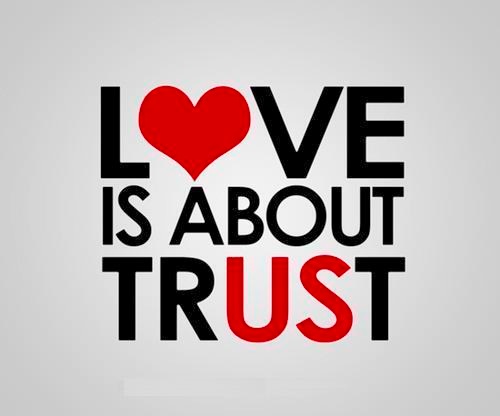
Why Deeper Love Is About Trust

In his last post, JacoPhillip Crous wrote about learning to love after the fall. In his next heartfelt piece, JacoPhillip shares his personal experiences on when he engaged in the coupling guidance process with his partner and "husband" of over eight years. JacoPhillip Crous reports.

* * *

Understanding each other's language 

“I finally discovered that my greatest fear is not being alone; it’s being vulnerable.”

When choosing coupling committedly with someone who is also your lover, therein, you are equal, adult partners; you love one another. Psychologist William James believed that possibly the deepest human need is the need to feel appreciated – knowing that you are valuable (precious, if you like) to your lover.

“We struggled for years trying to love each other more, or better, or something, but . . .” said Tony*, in a committed relationship of eight years with Allen* who concludes Tony’s consternation, “... but our efforts have missed each other, first emotionally, then sexually, and now, we’re both on different tangents altogether."

It requires great character strength, and not insignificant foolishness, to walk away from years of personal investment and endearment. Sometimes it is what needs to be done; most times, getting your coupling situation to a translator is all the remedy needed. Let me explain.

As a human being, as a person, I am not without tangents and neither is my beloved of near nine years. Both building our respective professional practices over the past couple of years put us out of step with each other. We even noticed, corrected our relationship course, and sailed forward. He made course corrections. I made course corrections. More than a year later, we found ourselves navigating our relationship, our emotions, and desires in different directions. We had misunderstood each other. What he said he needed from me, and what I heard, was as tangential as what he heard me say I needed from him, and what I meant.

Only by seeking out coupling guidance could we be sure that our very real partnership needs would be translated without fear or favor into language each of us could understand respectively, thereby enabling us to dialogue our way out of dilemma together. Now that we better understand each other’s language, the emotional climate of our relationship has radically improved.

If I were to develop my intimate emotional relationship with my partner, my lover, then he and I needed to understand each other’s needs and desires. If we are to love each other better and kindle more the lust in our coupling (a fire can always burn higher and hotter), I need to understand what he requires to turn him on, emotionally and erotically, and he vice versa. Your emotional and erotic language, how you personally express such needs and desires, is however all-important to them being understood. We need to speak our lover’s language if we are to get them, and get them to understand our needs.

In this, coupling guidance (marriage counselling, relationship counselling, couples therapy, whatever you want to call the process of learning greater love in partnership) is an awesome tool by which to tune your understanding in on your lover’s language. It is a tool you should pick up gratefully and with great enthusiasm; just a decade ago such a tool for gay men and women would have been considered ludicrous.

“Same-sex-couple” undeniably positions sex central to gay coupling commitment (please share your comment below if your opinion differs – dialogue is development). It is thus vital to work with coupling guidance consultants who, like myself, give this due respect in coupling guidance. The love and sex shared by two people is a dialogue. We do not intrinsically understand each other’s erotic language – which we develop ourselves from our experiences – but with undulating arms, torsos, and legs all wrestle-rubbing us to orgasm, we seem to get by on each other’s body language.

Devoted, sexy partnership is NOT about ‘getting by’. It is about how to provide and share in ecstatic appreciation with your lover for each other. IMAO (in my arrogant opinion). That’s where the colloquial expression “to make love” surely found its romantic roots. I am adamant to become as fluent as possible in my lover’s erotic language, so that when I make love the ecstasy might be out of this world. What better gift to your beloved, right?

Notice the word ‘gift’ right there? If every time you make whoopee is ecstatic, kudos is due to you, but most couples practice an all-sorts staple of hearty sex for the great pleasure of getting off. Making love, on the other hand, is perhaps only a human ability: an art, a poem to your lover in his own personal erotic language.

To understand this deeper meaning within another person requires knowing your own depths: physically, mentally, and spiritually. What a marvellous adventure to share with your lover once on the road to discovery, one without end in sight. One you need not brave alone with a committed partner by your side. I finally discovered that my greatest fear is not being alone; it’s being vulnerable. Learning what has deep meaning for my lover is necessarily reciprocity of honesty and transparency. If it were not, intimacy would hardly be possible.

What I mean to lead on to is that, like Allan and Tony, my lover and I recognised – only once within the process of coupling guidance, as participants ourselves – that if we do not reconcile ourselves to our fear of vulnerability (a fear in the dark recesses of contemporary man’s masculinity and a fear today’s women harbour in the shadow of patriarchal hegemony), we would not be able to build and develop intimacy in our partnership.

Trust is arguably the greatest intimacy two people can share. This intimacy abused can harm not only your relationship, but also both your hearts and minds.

Honesty and Transparency

For lovers building trust (repairing it, expanding it, changing it, or just doing the upkeep on it): it can only stand on a foundation of honesty and transparency. To put it another way, by accepting the vulnerability risk with one’s partner, the way towards more meaningful, loving and greater sex is clear; through shared honesty and transparency.

Now honesty is simple to grow, if not easy. Sow honesty and you’ll reap honestly. That means more than it may read as, so look at it again. Let me exemplify. Myself, having to lie to my partner, even the ‘white’ lies, implies to me that I could feel shame by sharing the truth. I consider being able to show my partner that I can feel shame makes me a more whole person deserving of his love. So by being open and honest with him, I gain the personal integrity needed to face up to his honesty. My partner’s honesty with me definitely stirs my emotional coals about; deeper the honesty, higher leaps my flame for him. It is a gift I treat with respect and one I try to show my gratitude for regularly by reciprocating with my wholehearted honesty.

 In the spirit of full disclosure, I admit honesty can be burdensome. Your shared devotion to one another – and it pleases me to tell you, that honesty is like fertilizer for devotion – will shoulder near any burden harvested from honesty. Transparency is more of a knot. It is dialogical bonding you create between you and your partner. I hear “. . . we have been together for years, we even finish each other’s sentences” from couples, and I have to remind them that this achievement does not mean you are having the same feelings, nor necessarily know what your partner is, in truth, thinking. Knowing this I, myself, still ‘assume’ I know what feelings and thoughts my lover has. Assumption is a naturally evolved aptitude of the human mind. In our partnerships, to fulfil commitment to a beloved, we need to preclude assumption: I need to know what my lover is really thinking and feeling.

Before you ‘assume’, try this mad method called ‘asking’. Within the first couple of months of coupling guidance I had been applying it skillfully, professionally, neglecting to practice it in my own personal life with my lover. Transparency is the willing and open exchange of psychological experience with your lover by asking and honestly responding between the two of you. Inquiring after the feelings and thoughts of our beloved nurtures mutual interest in the lived experience of the partnership, and emotionally invests you both in the commitment between you. Transparency is how deeply I explore into my lover’s heart and mind by asking ‘deeper’ questions, and of course from what depth my partner would respond. This transparency of self that devoted lovers share, being open to one another, can make one feel vulnerable. ‘I feel vulnerable’ is decisively different from ‘I am vulnerable’. Emotions are not a choice. Behavior is. Recognize what you are feeling for what it is: an emotion. We can stand up against our emotions. For a couple that stands by each other through honesty and transparency, trust is forged, and such trust does not render the lover vulnerable. Quite the contrary.

The validation from having my lover’s trust strengthens my resolve against my feelings of vulnerability. I deal with vulnerability by dealing with vulnerability. I feel the same vulnerability anyone else would; I just no longer identify with it. I defuse from this emotion when I feel vulnerable, or any negative emotion assailing my commitment to my partner for that matter, I consciously choose to act despite it. I accept it and move on with living out my love in the light.

Know more, love better, and understand your relationship.

GetLusty empowers couples, gay and straight, enriching the lives of people in committed relationships around the world. I look forward to providing more gay coupling information while I impart personal and professional experience of men and masculinities as a sex-researcher and -educator to you.

I’ll do near well anything to help you get your lust on for your lover, and share the joy and learning from it with the lovers of the world.

Do It well; do It safe.
Jacsman

*For ethical privacy all person names are given as nom de guerre.

Also, a quick note! Throughout October, we'll be giving away products, discounts and special privileges to our GetLusty community. For example, by October 15th, we're giving away a Sqweel 2, the world's best selling oral sex toy. Become a member of our growing community. 'Like' us on Facebook and/or subscribe to our eNewsletter to join in (and win in the process).

He just started writing, but we're already so excited about JacoPhillip. Our resident advisor on gay long-term relationships, JacoPhillip Crous is also known as Jacsman.

He studies & consults on ecstatic & intimate psycho-sexual health & development, promoting & improving male2male dialogue that furthers understanding of masculine sexuality and MSM relationships. A sex educator, JacoPhillip Crous studies about and consults around male psycho-sexual self-development phenomena, behaviours, experiences and knowledgeablity. Find out more about JacoPhillip at: http://about.me/Jacsman.

Generations Across: Why Stop Love Ageism

As a wife with a husband 10 years my elder, I definitely hear this article--if from the hetero perspective. Even from the hetero perspective, there's already ageism. Well, I couldn't fall in love with that person because of their age. Our sexual and love choices include many factors, including age.

But what about gay couples where one partner is older? How do both hetero couples respond to that and how can the gay community be more accepting? How can we all be more accepting to couples that might be different to our own dynamics? JacoPhillip Crous reports.

* * *

“The sex is more imaginative; 
 it feels more sensitive
 and this allows us to make love 
 with a greater degree of altruism.”

– James*, 32, 
 partner of twelve years to Mark*, 54.

Seen here, Juan Hidalgo’s photograph of two men kissing made a very controversial impression early in 2012. I was discussing it with a colleague when he brought to my attention the age difference between the two men in the photograph.

Suddenly many conversations rushed into my mind. I hurriedly had to nip our deliberation in the bud and proceeded to rifle through the narratives of couples who have crossed the generation divide, sharing with me so many of their experiences, viewpoints, and insights.

What is Ageism?

Ageism is prejudice and/or discrimination on the grounds of a person’s age. In gay communities around the world, ageism is more than problematic.

It constrains mens' masculine development, is caustic to our shared identity in manhood, and more importantly, consumptive of our sense of gay community. Some gay couples' love and lust for one another bridge across their generation gap. Those couples have a very good vantage point to observe gay mens' prejudices and gay social discrimination around aging and generation cohorts.

Let's not be ageist with love

William*, as a young gay man of 24, now partner of five years to John* who caricatures himself “a mature child of 40”, recalls how, while he was still just dating John, gay friends would repeatedly refer to him as “the young boy”. William was once very upset at one of John’s peer friends referring to him as “some fresh young thing”. I remember John commenting while the two of them scooched closer together on the couch: “As if Will was going to go off by a certain date.” It may just be the way gay men talk, but a stereotype is at its best offensive, and even more so when we consider that in circumstances such as these it comes from those who are opposed to themselves being stereotyped in any way.

James, 32, and Mark, 54, have been committed to each other for more than twelve years, yet whenever they step out of their circle, the age gap in their relationship opens a Pandora’s box of prejudices. James once remarked that, “the majority of older gay men we meet, treat me as some vapid nymph only after an easy ride (no pun intended), while Mark receives patronizing, congratulatory pats on the back as if he has won me as first prize in a pissing contest . . . younger guys usually react with waves of incredulity and panic.” It saddens me to have to agree with Mark when he says that the majority of young gay men are not interested in what older gay generations have to contribute.

It is the older generations that fought, sweat, tears, and blood for the acceptance and rights many younger generations now take for granted. “My generation made a gay reality possible,” points out Paul, 62, now in the sixth year of partnership with Peter, 38. Everyone over forty now has lived before and during the AIDS epidemic. Older generations were, in that context, also the pioneers of safe sex. “Safe sex, in some ways, made us look for other sexual practices” says Paul, Peter following quick with, “I learned that from Paul . . . there is so much more we can do than just fuck.” Paul takes heart that there are still some young men who value the traditions that provided a community in the first place, that “there are still young men out there who appreciate our minds and our sex.”

The couples I have had the pleasure of knowing, as diverse as you can imagine, strike accord on one very pertinent characteristic. Sex is experienced by both partners to be more imaginative. It is felt to be more sensitive and given with a greater degree of altruism. I believe that this is a result of mentorship these sexual partners share and enjoy. It's driven by the emotional satisfaction we all gain from teaching our beloved and being taught by our lovers.

Let's consider the historical context

The tradition of mentors in homosocial communities reaches far back into ancient Hellenic and Roman cultures, and likely beyond. It shouldn’t be a surprise that this dynamic raises its head, so to speak, in contemporary homosexual culture.

Because many gay men leave home without having been taught the finer things, like which linen to buy, which crystal to have, how to arrange flowers, choose a colour scheme, or how to throw a dinner party, these things and more are considered community things to be learnt from gay communion.

As homosexuals, we have to recognise that there are traditions that hold our global gay community together. This recognition on the side of the elder is perhaps the one thing that most separates the generations in gay living today. This sense of mentorship in gay culture is most pronounced in couples were there is a pronounced age difference between partners.

Let's nurture all loving, consensual relationships

Nurturing a relationship across such a generational gap is no matter of course though. The double prejudice suffered by these gay couples is a near active dissuasion. Not only do these men have to overcome the hegemonic disdain for their commitment and relationships. They also face prejudgement from within the gay community over their partnerships. Aron, 45, has been in a relationship with Tom, 27, for little over two years now and says to me, “I see it, our relationship... as a mirror image of the same condescension suffered by interracial couples.” Now, before your mind opens a whole other can of worms, this statement sharply focuses the feeling of discrimination these gay couples experience.

We should not perpetuate terms of endearment. Our love for our partners, if not revered, should at least be respected. Union in partnership, our emotional commitment, our sense of gay community, is in the fact that we love and choose to partner with someone of the same sex. As valid and enriching as these exemplary relationships are to the men in them, so too they are to gay community.

GetLusty provides recognition and support to all couples. If you would like to know more on a specific topic or have a particular question in need of an answer, GetLusty resources are enriching the lives of people in committed relationships around the world and you are welcome to subscribe. Have your comments and queries tackled by the professional talent (like me!) contributing to GetLusty.

I will share more gay coupling experiences with you next week on Get Lusty. Coupling: Trust clouts Fear, will include my personal experiences when I engaged with the coupling guidance process together with my ‘husband’ of over eight years.

Get the lust on for your lover, and share the joy and learning from it with the lovers of the world.

Do It well; do It safe.
 Jacsman
*For ethical privacy all person names are given as nom de guerre

Though he's a new writer, we're already extremely excited about JacoPhillip. Our resident advisor on gay long-term relationships, JacoPhillip Crous is also known as Jacsman.

He studies & consults on ecstatic & intimate psycho-sexual health & development, promoting & improving male2male dialogue that furthers understanding of masculine sexuality and MSM relationships. A sex educator, JacoPhillip Crous studies about and consults around male psycho-sexual self-development phenomena, behaviours, experiences and knowledgeablity. Find out more about JacoPhillip at: http://about.me/Jacsman. Also subscribe on Facebook.
Copyright © 2011. thethrifters - All Rights Reserved
Proudly powered by Blogger